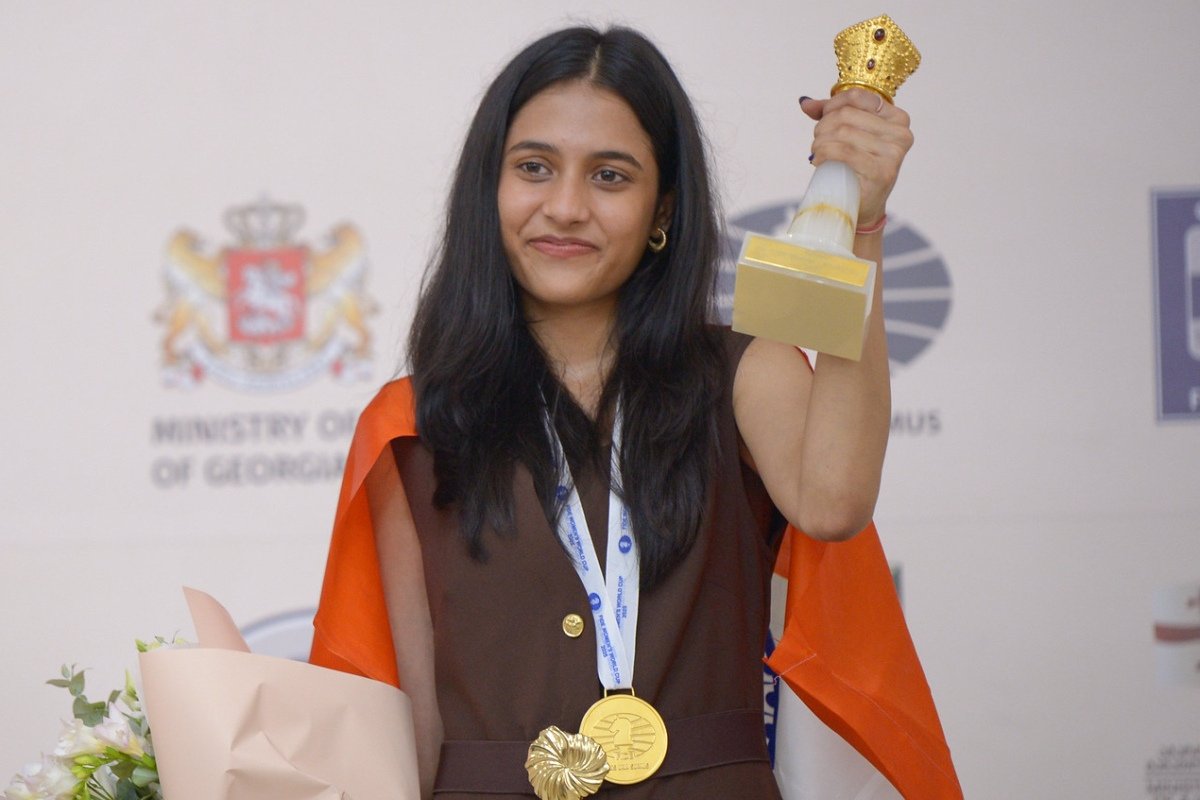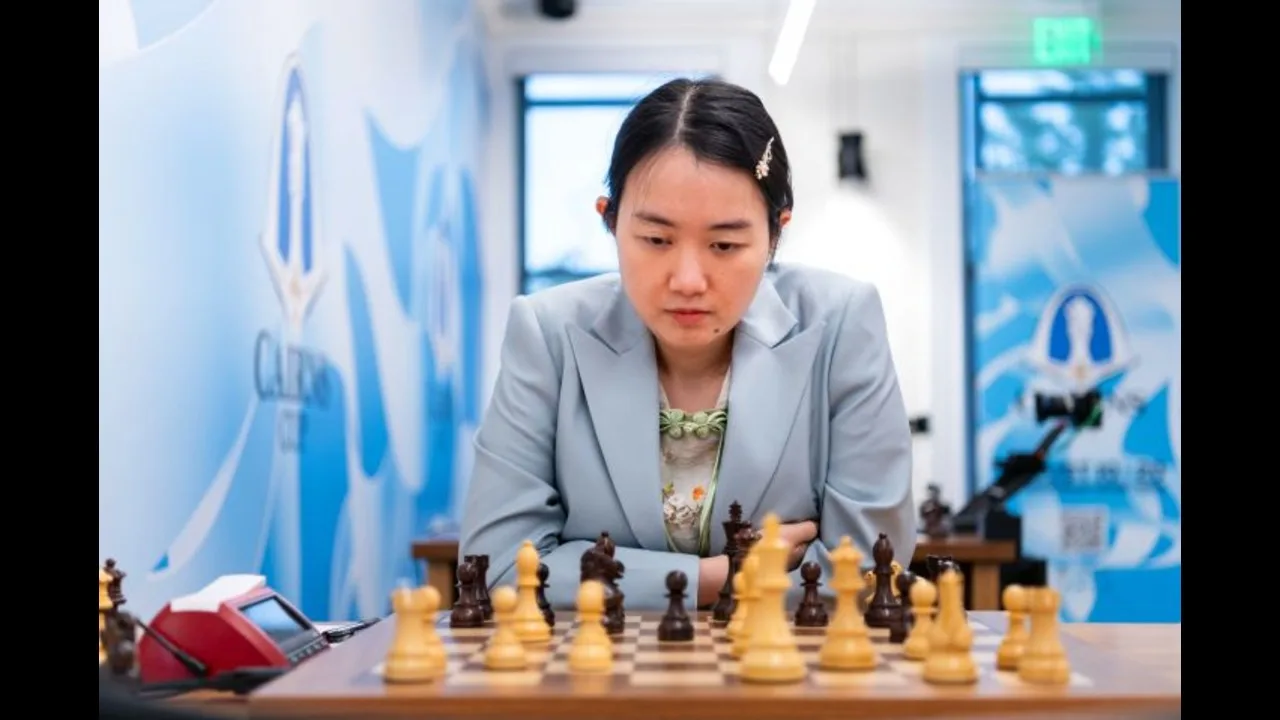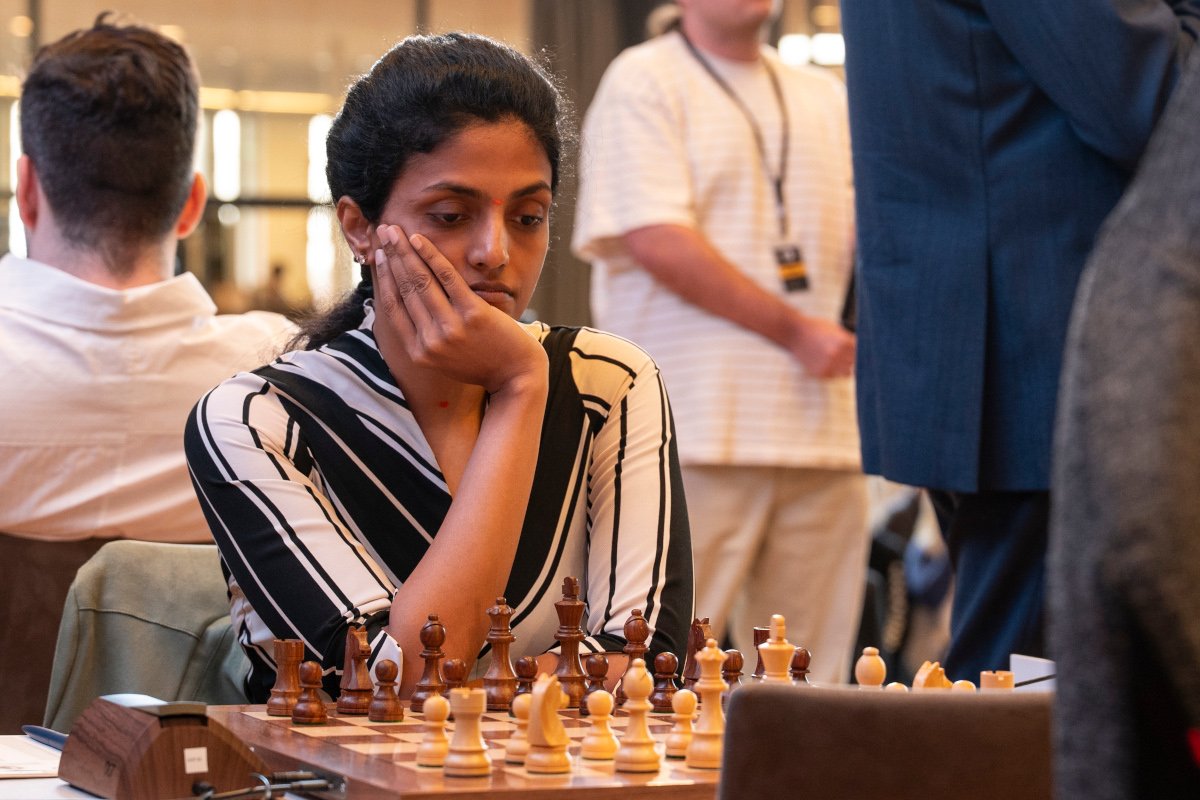
For twenty years, Harika Dronavalli was a member of every Indian team that walked into the Olympiad hall. Whether it was board one, board two, whatever the assignment, she was there, bearing the pressure that comes with playing for the country rather than just for yourself. So when the Indian team for the 2026 Chess Olympiad was announced without her name, the news read, on the surface, like a changing of the guard: Humpy Koneru is back in the team and Savitha Shri B is stepping in as a fresh player with a new captain: Swayam Mishra himself. Read Harika’s thoughts on the decision.
Inside Harika Dronavalli’s toughest decision
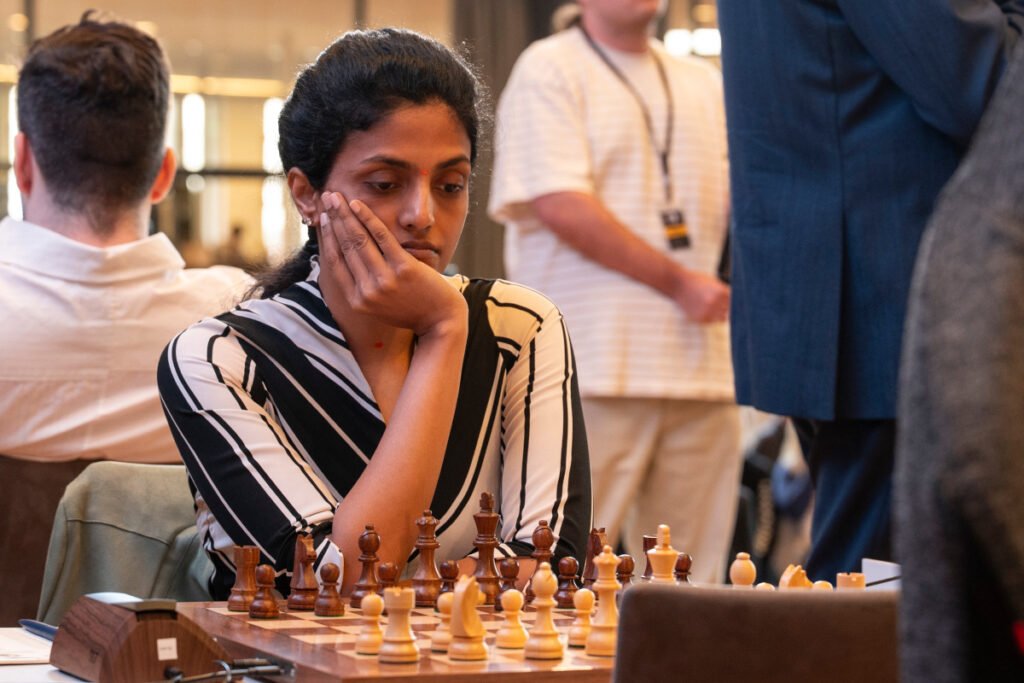
‘Like leaving a medal almost on my own’. That’s how Harika Dronavalli described her decision to sit out of the 2026 Chess Olympiad, a tournament she has played and shone in for many years. Having been part of India’s historic Olympic gold-winning teams, Harika explained why she decided to step away from team chess on her own terms after 23 years, and what still keeps her going.
When asked directly about not being part of the team, Harika expressed no regret. She described weighing practicality against something harder to name, like pulling what feels truly right against what makes sense on paper.
Also Read –
- Vidit Gujrathi and Divya Deshmukh honoured with Arjuna Award
- Gligoric Trophy 2026: Call for nominations
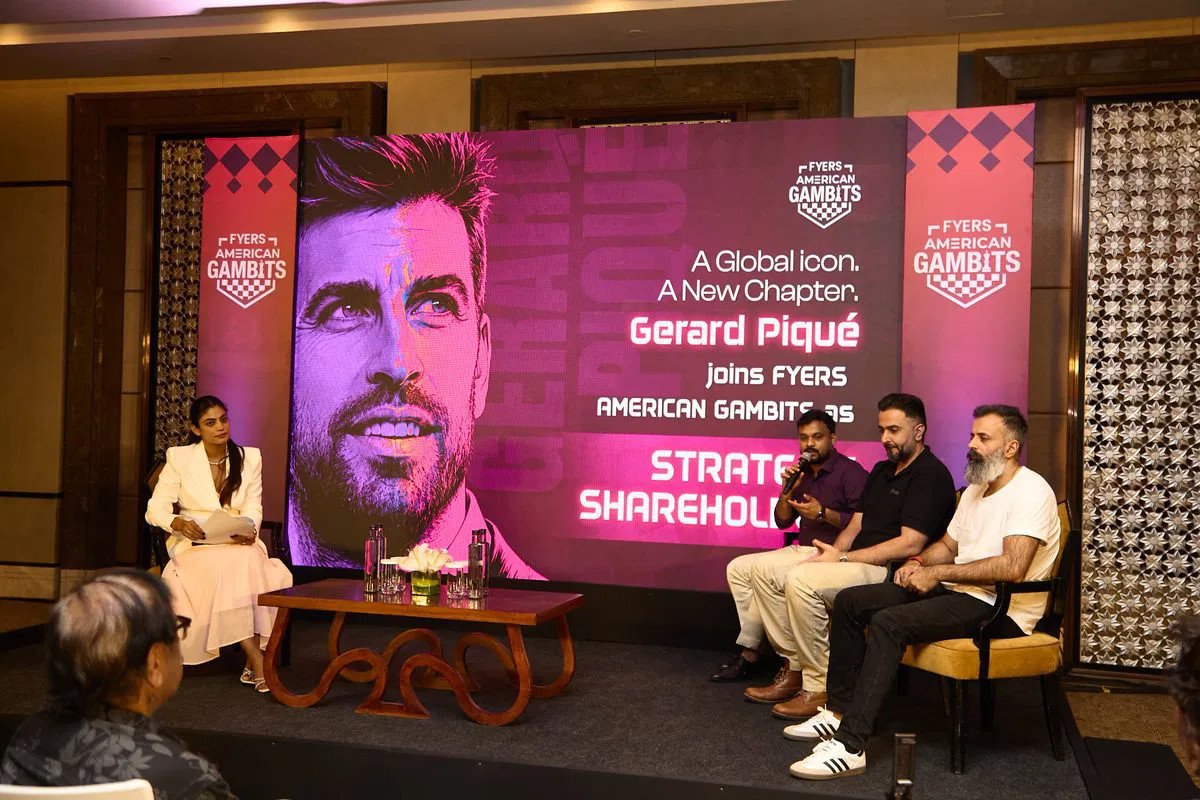
- Renowned ex-footballer Gerard Piqué now part-owner of Fyers American Gambits
- “It was solely my decision”: Harika Dronavalli on stepping back from representing India in the Olympiad
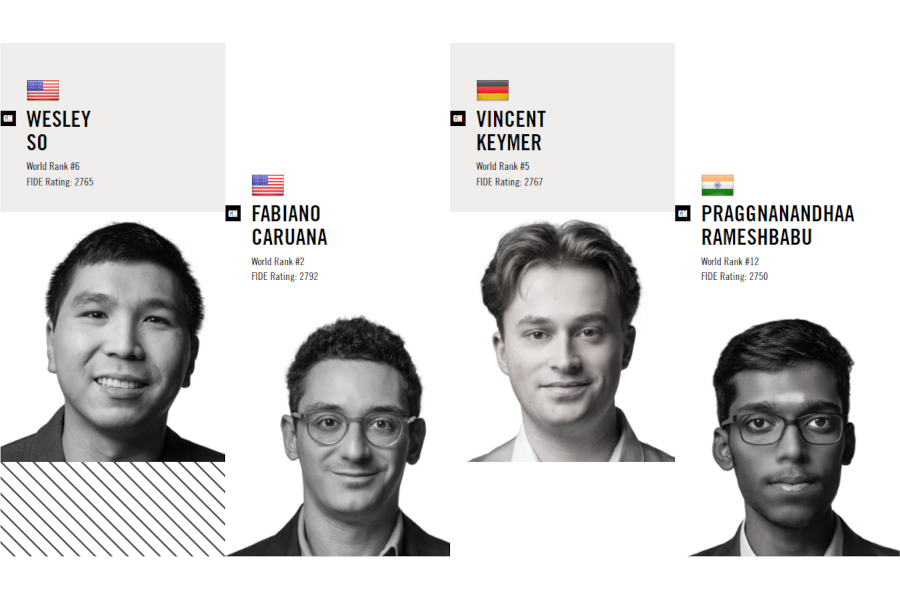
- GCT Finals with Pragg, So, Caruana and Keymer: Format and schedule
‘It was completely my decision, which came from my heart, from my conscience. Maybe practically it would have been good to play and win a medal, but I felt that I wanted to do something from the heart more than practicality.’
She explained that team events carry a weight that individual tournaments don’t. It’s not just chess, but the responsibility of knowing that your result affects four other people, and doing that for two decades, event after event, takes a cumulative toll.
‘It may seem simple, like playing a tournament, but over all these years, there are so many emotions, energies, and so many things that you experience.’
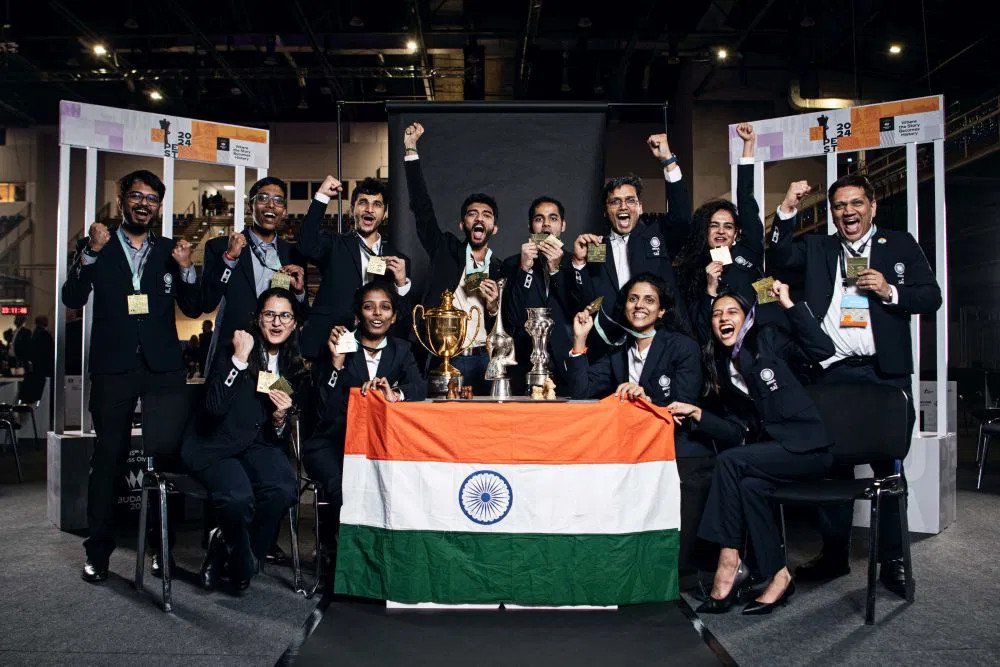
Eventually, after the emotional high of winning the Olympic gold with the team in 2024, something clicked in her.
‘I felt that was it. That’s what I wanted. I achieved it, and I wanted to leave it at that.’
Making room, not stepping away
Harika was careful to frame the decision as generosity rather than burnout. She pointed to the strength of the team coming up behind her, including players like Savitha Shri, who she believes will bring the same hunger the team needs right now. ‘I’m sure she will have more enthusiasm,’ Harika said, ‘and she will be happier being part of the team and will enjoy and try to give her best. So why not? I just felt that’s enough.’
She was equally clear about what it isn’t. ‘It’s not that I’m retiring,’ she said, when Sagar noted how strange the statement might sound from a player who has won two team Olympic gold medals. The step is specifically from the intensity of team championships and Olympiads and events like that, rather than from competitive chess overall. ‘Where there are a lot of emotions and energy involved, I would like to step back,’ she said. ‘That is, at least for me, the reason to step away from it.’
Even while acknowledging what she was leaving behind, she didn’t hesitate to name it clearly: with Humpy, Vaishali, and Divya anchoring the team, another gold medal is within reach, a medal she would no longer be part of winning, but she had faith in the team’s immense talent and patience.
‘It’s like leaving a medal almost on my own. It wasn’t easy. I don’t know if it’s a good decision or a bad one, but I know I’m giving up something. I’m happy to accept that decision on my own terms.’
The door that stays open
The individual World Championship remains firmly on her radar. When asked if that ambition is still alive, Harika didn’t hesitate. ‘Of course, without that I cannot move forward,’ she said. ‘I think I still have a long way to go and that will be my ultimate goal.’ She said her current focus is, first, on getting back her strength as a player, and then, when the right time comes, achieving the World Championship target.
She also left room for circumstances to change. ‘You never know the future, you cannot predict,’ she said specifically about the team door, and said she would step in again if she felt she was really needed. But for now, the choice is to close this chapter while it still feels like a high point, rather than letting it fade on its own.
Two different lives
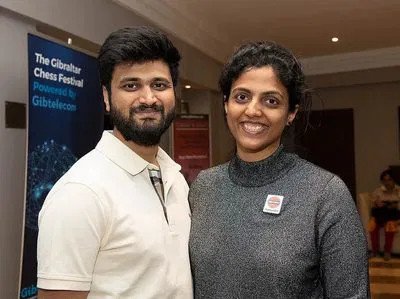
Team chess wasn’t the only thing that changed after Harika became a mother. When asked whether it’s possible to prepare with the same intensity as before while raising a young daughter, she was candid.
‘Not really, and it shouldn’t be. But fortunately, in my case, it’s only possible because of the support system I have. Whether it’s my parents, my grandmother, my husband. My daughter is also very understanding. If I tell her I have a tournament and I’ll come back later, she says, ‘Okay amma.’ If I tell her I have a tournament and I’ll come back later, she already understands.’
She said that support has reshaped how she navigates her days. ‘I’m living two completely different lives,’ she said, describing a routine built around strict boundaries, which includes a fixed block of time for chess, then a complete switch to being present for her daughter, taking her out, teaching her things. She acknowledged that the contrast can be almost funny.
‘It’s very funny. On one side, I’ll check what to buy for her, select her clothes, etc., and on the other side I’ll be checking important chess files.’
But behind the humour is something she takes seriously: a deep sense of gratitude towards everyone who makes both lives possible.
‘I think more than before, I show more gratitude in life now, because I value much more what they are doing for me, especially for my daughter. As a mother, your child becomes very important, and when they are doing so much for her and for me, it means a lot more.’
‘I want to make them proud, I want to make their hard work worth it, and I want the time that my daughter and I miss out on to also be worth it.’
On the challenging aspect of juggling motherhood and the world of chess, Harika says:
‘As a mother, you feel guilty for not spending more time with her and then I try to compensate as much as possible. So basically, I would be living chess as a player, and then I would go to her and try to be a strict mother checking her schedule, also trying to teach her discipline.’
She also pointed out that playing chess now has its advantages, because it makes you reorganise your priorities.
‘If things went wrong earlier (chess-wise), it would be the end of the world. We would think, ‘Oh my god, how could I lose this?’ But now even if I have a tough patch or a bad tournament, with one smile from my daughter, it doesn’t matter whether I win or lose. She will say, ‘Amma, when are you coming back home?”
On the chess side of that divided life, Harika pointed to a small, tight-knit circle she currently works with, which includes Praneet Vuppala and Rajarshi Kumar Singh, describing the arrangement as less formal and more of a shared, motivating working relationship among players from the same city. ‘When you have to work alone, it’s boring,’ she said. ‘It’s very nice to work with each other.’ She added that having them around helps her stay focused on important days, not letting other responsibilities overwhelm her. ‘It’s good to see chess from a different perspective nowadays.’
It’s important to note just how incredible Harika’s team record really is. She has played in Asian Championships, world team events, and ten consecutive Olympiads without ever missing one, including competing in the Asian Nations Cup just fifteen days before her wedding in 2018 and playing a full Olympiad campaign in the ninth month of her pregnancy in 2022.
Sagar Shah, in the interview, reflected on that history, pointing out how much stability her presence has given the team over the years. A player who can hold her own in any tournament, on any board, against anyone. Harika admitted that hearing it summed up like that made her emotional. ‘I had tears in my eyes, which I’m trying to control,’ she said. ‘It’s a journey I would like to remember like that.’
For a player who has spent over two decades carrying the weight of team chess for India, this might be the most fitting way to step away: not fading out, but walking away on her own terms with a gold medal in hand, her sights still set on chasing an individual goal.